11 posts tagged with "clean code"

View All Tags

Vibe Coding Best Practices: Feature Flags as a Safety Net

· 16 min read
Eszter Valentinyi-Harmath
Marketing in the heart, front-end in the mind, Nutella in the veins.

Vibe coding is genuinely changing how software gets shipped. It's not hard to see why: faster iterations, lower barrier to entry, more time in flow, and less time wrestling with boilerplate.

Production, on the other hand, doesn't care about your flow state.

You've probably been there: a feature that looked clean in every prompt, passed the automated tests, survived a quick review, and got merged without a second thought, only to silently misbehave for a slice of your users hours later. The AI didn't know about the edge case. You didn't catch it. And now you're debugging code you didn't quite write.

This doesn't mean vibe coding is the problem. It means AI-assisted development needs a production safety net. And what is one of the most practical safety nets for production features? Feature flags.
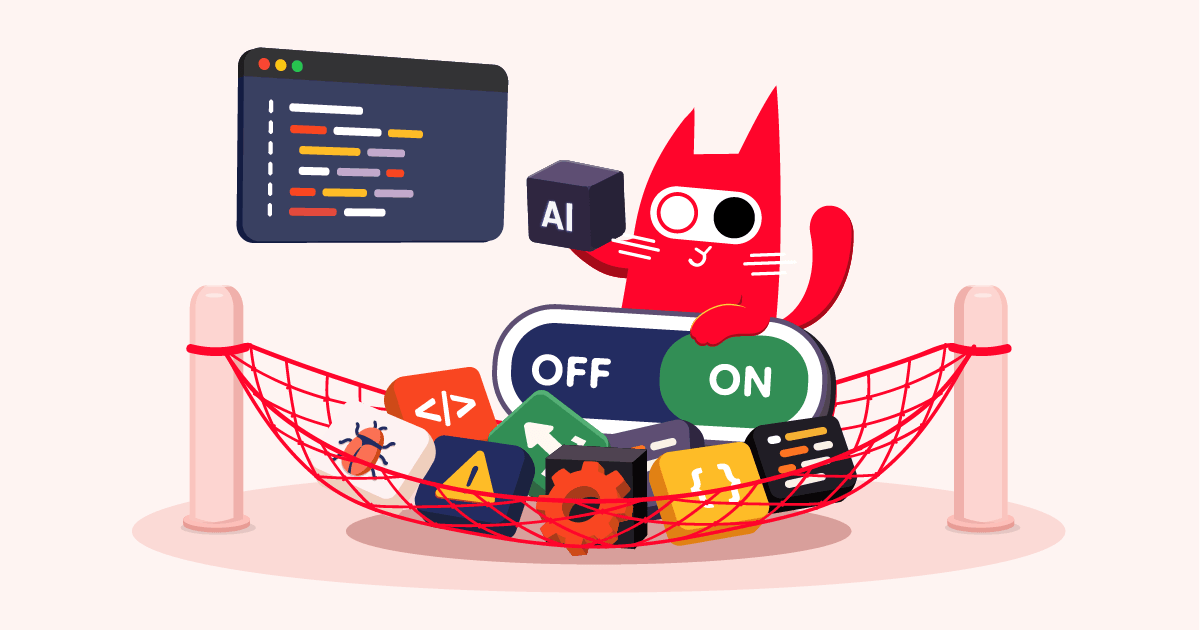
Vibe coding best practices with feature flags as a safety net

Feature Flag Best Practices: 7 Common Mistakes to Avoid

· 12 min read
Marko Benjak
It works on my machine.
Csilla Kisfaludi
Tech support by day, movie addict by night, crazy cat lady 24/7.

Feature flags (also called feature toggles) let development teams release features safely without redeploying code. They power gradual rollouts, A/B testing, and fast rollbacks when things go wrong.

But as systems grow, feature flags often become a source of hidden complexity. Flags pile up, naming breaks down, and unclear ownership leads to risky changes in production. What starts as a simple toggle system can quickly turn into long-term technical debt.

This guide walks through seven common feature flag mistakes and the best practices to avoid them, so your system stays clean, predictable, and safe to work with.

Feature Flag Best Practices - Top Mistakes to Avoid

Identifying Technical Debt: Stale Feature Flags in ConfigCat

· 5 min read
Zoltan David
One with a vision, answers and a master plan.
Chavez Harris
Build. Break. Learn. Repeat.

Feature flags help teams release features safely and quickly, but if left unmanaged, they can become stale and accumulate technical debt. To keep your codebase clean, you can use the Zombie Flags page, the Zombie Flags Report, and the Zombie Flags API. Let’s take a closer look at each of them.

ConfigCat Zombie Flags Report cover

Feature Flag Retirement

· 5 min read
Marko Benjak
It works on my machine.

With the constant growing digitalization, our lives are continually enhanced by innovative features that simplify daily tasks. Central to this seamless integration of new functionalities is the concept of feature flagging—a powerful tool that allows developers to effortlessly toggle software components on or off.

This flexibility enables modifications without the need to redeploy or risk breaking the entire software infrastructure, offering tailored experiences to specific clients, regions, or user groups. Feature flags extend beyond mere software development, unlocking a plethora of versatile applications across various domains.

However, the utility of feature flags is primarily intended for temporary use and demands a strategic approach for their retirement. Hence, understanding the nuances of feature flag retirement is essential in maintaining an efficient and clean codebase.

Feature Flag Retirement Notes

A Quick Guide to Feature Flag Naming Conventions

· 9 min read
Zayyad Muhammad Sani
You live, you learn.

Can naming feature flags be hard?

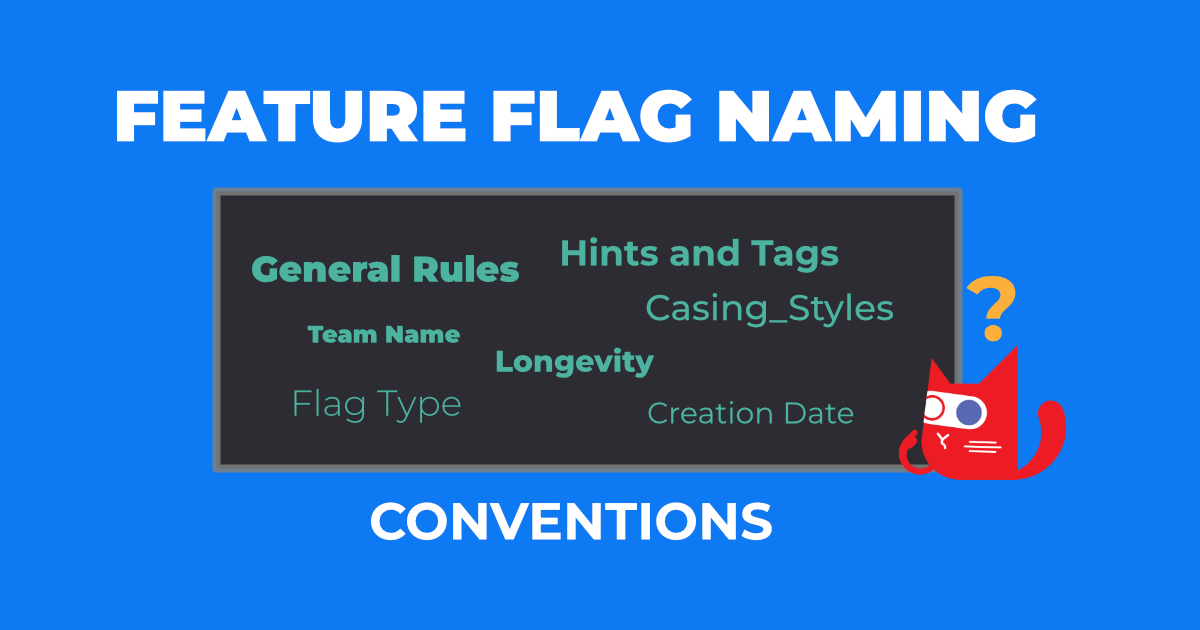
Yes. Just like variables in programming, naming feature flags can get tricky if you don't follow a naming standard. When feature flags don't have good names, it can be difficult for people using them to remember what they do.

In this guide, we'll walk through feature flag naming conventions and best practices that help teams manage flags at scale.

A Quick Guide to Feature Flag Naming Conventions

Introducing ConfigCat's Code References Feature

· 7 min read
Chavez Harris
Build. Break. Learn. Repeat.

The primary goal of many software companies today is to keep end users engaged with their software by releasing new features and updates. This is made possible via a mechanism known as feature flagging. As software applications grow and scale to the ever-increasing demand for new features, another problem arises. It is easy to lose track of where we use feature flags throughout our code. This results in forgetting to remove them when their features have been fully implemented and deployed. How do we fix this?

ConfigCat feature flags in CI/CD pipelines

Managing Feature Flags in Multi-developer Environments

· 3 min read
Zoltan David
One with a vision, answers and a master plan.
Roxana Halați
I'm pretty cool, but I cry a lot.

If you’ve been reading about feature flags then I’m sure you’re convinced of the power and value they provide. Since development is mostly a team effort, you may be wondering how to manage a feature flag within a team, regardless of size, so one developer’s work doesn’t affect another’s. Well, in this article, we discuss exactly this issue and offer two solutions, depending on the size of your team.

Cover

Feature Flag Lifespans - Short or Long?

· 7 min read
David Herbert
Turning deep tech into stories developers actually want to read.

Feature flags (aka. feature toggles) are becoming increasingly relevant in software development as they provide the ability to toggle features on or off in production, perform a gradual rollout of features and enable A/B testing experiments.

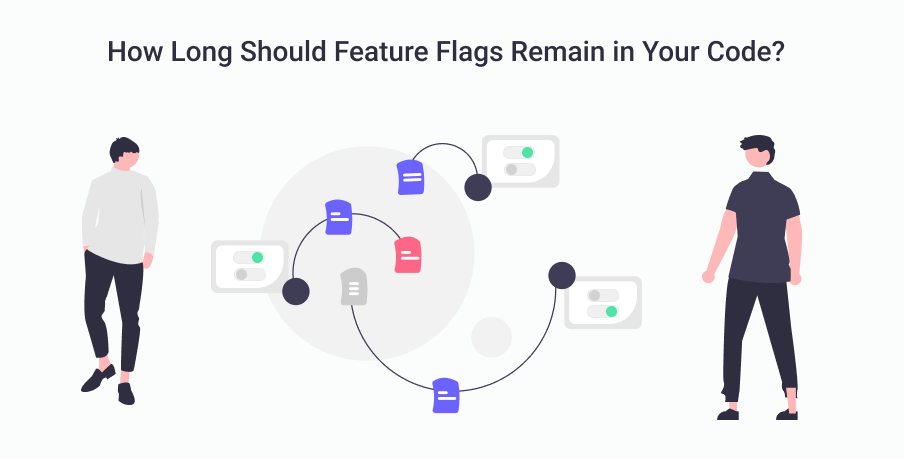
However, an often overlooked part of this feature flagging technique is that it introduces complexity and has inherent risks when said complexity isn't properly managed. As you're using more and more feature flags within your organization, it's important to understand that some of these flags are meant to last only for a short period and should, therefore, be removed from your codebase.

Feature Flags Life Circle

The Understated Importance of Clean Code

· 11 min read
Vlad Spatariu
Preparing to appease our future AI overlords.

Good code is one of the most valuable commodities in technology. Code quality can affect everything from code execution time and application load times to how easy it is to maintain, read, and debug.

It can also play a significant role in your company's competitiveness. If your competitors are spending more time fixing bugs than adding features, then they're losing ground to you.

Clean Code is important

Two technical terms that can save your project!

Code Hygiene goes hand in hand with avoiding Tech Debt, and these two should be THE backbone of your company’s philosophy!