2 posts tagged with "ring deployment"

View All Tags

Progressive Delivery: Strategies, Examples & Best Practices

· 15 min read

David Herbert
Turning deep tech into stories developers actually want to read.
Csilla Kisfaludi
Tech support by day, movie addict by night, crazy cat lady 24/7.

Every software release carries some risk. A feature might work perfectly in staging but behave differently when thousands of people start using it.

Progressive delivery helps reduce that risk by introducing changes gradually instead of releasing them to everyone at once. Teams can monitor how a feature performs, collect feedback, and decide when to expand a rollout or roll it back.

In this guide, we'll compare the main progressive delivery strategies, explain how feature flags support gradual releases, and walk through a practical example. We'll also cover what to monitor, how to decide when it's safe to expand a rollout, and what can go wrong along the way.
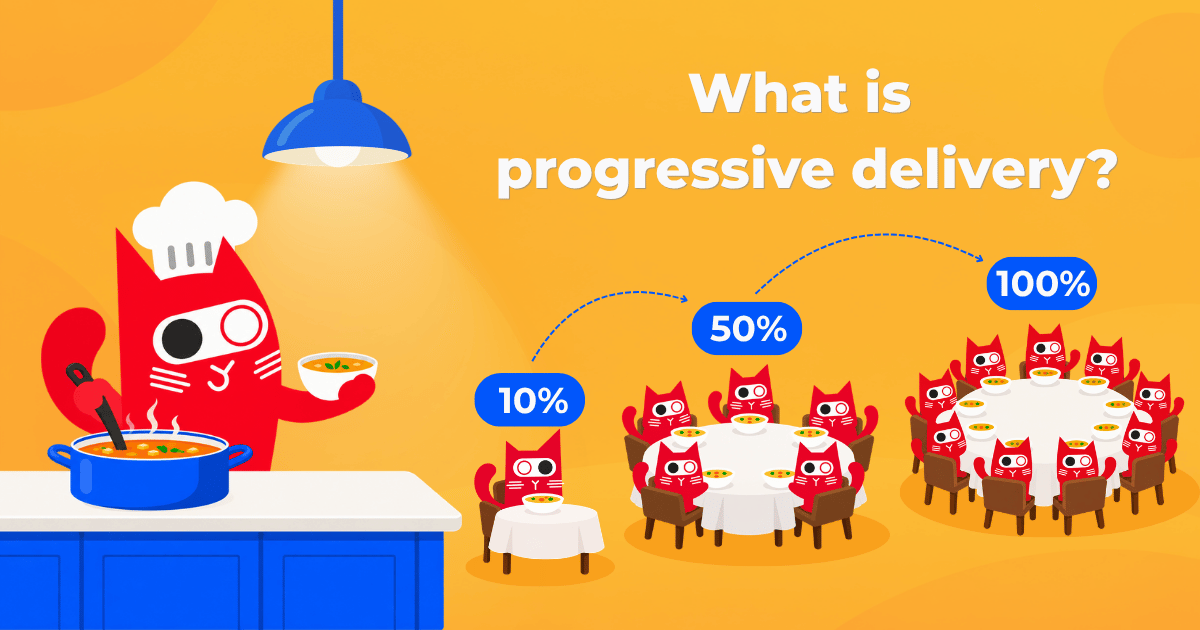
A chef cat serving a new dish to 10%, then 50%, then 100% of its guests

Optimizing Blue/Green and Ring Deployments with Feature Flags

· 8 min read
Roxana Halați
I'm pretty cool, but I cry a lot.

In software development, engineers and operations teams have a variety of deployment techniques, each with pros and cons. With so many options available, choosing the right release strategy can be challenging, especially when addressing specific problems.

In this blog, we will focus on two deployment strategies, blue/green and ring deployments, which aim to deploy software with minimal risk and disruptions, each using a different approach. These strategies can be applied to a variety of scenarios.

Coming up, we will explore how they work, their ideal use cases, their advantages and disadvantages, and, most importantly, how using a feature flag service like ConfigCat can enhance the flexibility and suitability of both blue/green and ring deployments to meet your specific needs.

Blue/Green and Ring Deployment Cover Photo