30 posts tagged with "progressive delivery"

View All Tags

Delivering Mobile Apps With Less Risk

· 7 min read
Roxana Halați
I'm pretty cool, but I cry a lot.

There’s nothing quite as exciting as seeing your app live on Google Play or the App Store. The culmination of months, if not years, of hard work can bring a sense of accomplishment, but with it comes the pressure of ensuring that your digital product functions as intended and meets the needs of your users.

Whether you’re planning to launch your first app or are a veteran in releases, you’re probably aware of the review process your app must go through before it can go live on the store. These reviews can take anywhere from a few hours to a few days, depending on the complexity of your app and the number of apps waiting to be reviewed.

Google Play on Mobile Screen

Feature Flags in Microfrontend Architecture

· 7 min read
David Herbert
Turning deep tech into stories developers actually want to read.

In today's fast-paced world, the web development landscape is constantly evolving, with user expectations for fast and responsive applications driving innovation. The need for more modular, scalable, and maintainable architectures is more crucial than ever, as web applications are now required to be highly adaptable and feature-rich.

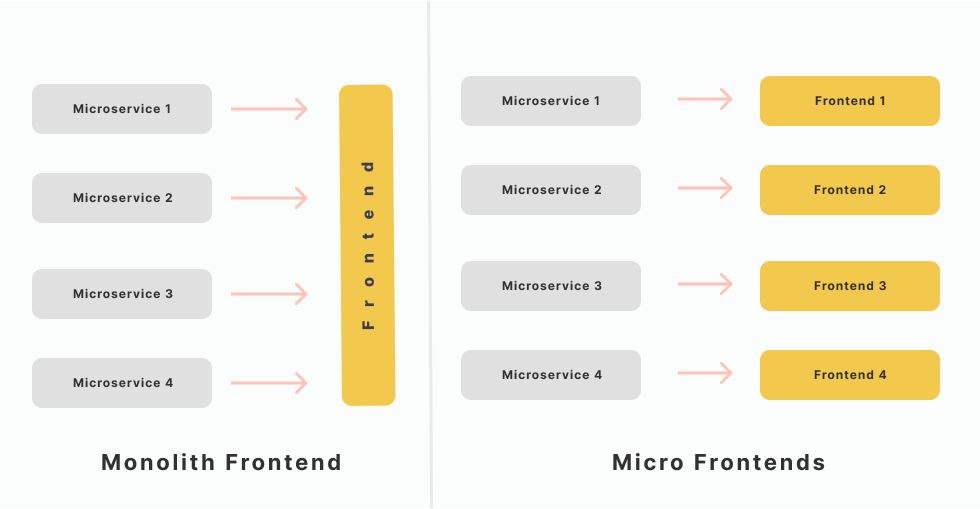
This has led to the rise of Microfrontends, an architectural approach that addresses the challenges faced by large frontend development teams working on monolithic frontend applications. Microfrontends have emerged as a solution to this challenge by breaking down these frontend monoliths into smaller, manageable components owned by cross-functional teams to facilitate the independent delivery of updates and new features. What are Microfrontends

Boosting Software Dev and Delivery with Feature Flags

· 7 min read
Alex Milea
Surf the code.

Software development and delivery is a dynamic process that requires constant adaptation and frequent testing. Therefore, how can you ensure that your code is reliable and secure? Can you test new features without disrupting or compromising service performance? How can you enable your teams to innovate quickly and efficiently?

The answer is feature flags.

Red cat launching rocket

Using Feature Flags in Your CI/CD Pipelines

· 5 min read
Chavez Harris
Build. Break. Learn. Repeat.

Continuous Integration and Continuous Development/Deployment, most commonly abbreviated as CI/CD has changed and improved the way modern software is developed and shipped. When compared to traditional approaches which had a definite end, the CI/CD process is always ongoing with a strong emphasis on automation. As a result, new features and updates are steadily released to end users. This puts a huge overhead on developers and stakeholders to manage features efficiently. But, with the right feature management tool in place, this can be streamlined and simplified without much overhead, if any at all.

ConfigCat feature flags in CI/CD pipelines

What Is a Feature Flag Management System?

· 9 min read
Emil Kovačević
Code hard, debug harder.

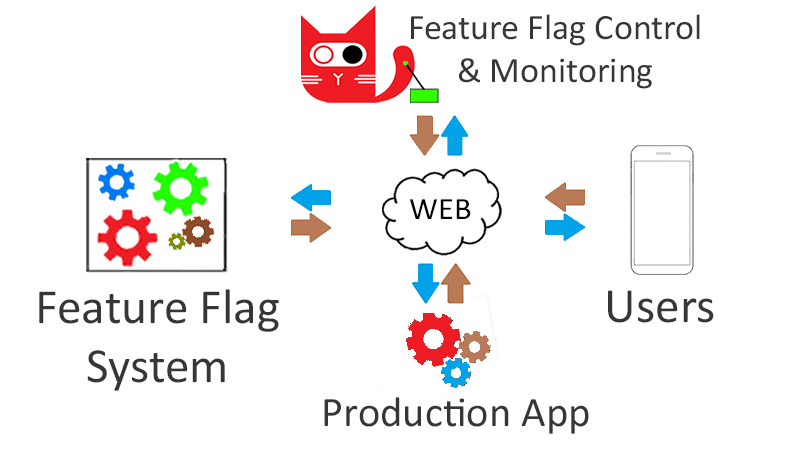
Software development workflows change over time, and they involve an organized plan of development tasks. Today, these tasks build up the software incrementally. The industry standard for tracking code changes is the source code management tool - Git. But, besides Git, there is another great thing that helps development teams. It is a feature management system. Read on to learn what a Feature Management System is, and its use in software development.

What is a feature management system cover photo

Eliminating Traditional Feature Release Anxieties

· 7 min read
David Herbert
Turning deep tech into stories developers actually want to read.

As developers, we spend countless hours building new features and having them pass through rigorous QA tests. However, despite experience and all preparations made, there's always that dreaded feeling you get in the pit of your stomach when you know it's time for deployment. What if something goes wrong in production and your feature doesn't function as expected?

Decoupling Feature Releases with Feature Flags

· 8 min read
David Herbert
Turning deep tech into stories developers actually want to read.

In a traditional software development workflow, whenever there are updates or feature releases to be made, they are typically tied to a single major deployment to production. As a result, the frequency of feature delivery is slower and a lot riskier because there’s a lot more at stake with each deployment if things don't go as planned.

That is to say that releases should not be tied to deployments but rather, decoupled from them. Due to this reason, in a continuous delivery environment, it is considered best practice to decouple feature releases from deployments as it allows for more incremental releases.

Hence, understanding the concept of decoupling releases from deployment and how feature flags can make that possible is a key for any team.

The Flag Hierarchy - Feature Bundling, Prerequisite & Dependent Feature Flags

· 7 min read
Endre Toth
Large scale enterprise development expert. The father of our SDKs and infrastructure.
Vlad Spatariu
Preparing to appease our future AI overlords.

Features can sometimes reach a high-enough level of complexity that simply cramming the entire thing behind a single feature flag and calling it a day becomes widely impractical.

More modular feature control needs to be thought of and implemented beforehand. Since such scenarios happen quite often all throughout development, a more advanced form of feature flag management is needed.

Understanding the Flag Hierarchy

While the base concept of feature flagging remains untouched (in the sense that they still toggle stuff on and off), feature flags nowadays tend to act more like an interconnected web of toggles where they may or may not be dependent on each other to run. The main benefit of all this added complexity is the ability to use flags to control certain parts of a feature in a very modular and clean way.

Progressive Delivery Strategies for Efficient Deployment

· 10 min read
David Herbert
Turning deep tech into stories developers actually want to read.

Building a modern application often involves building it as a microservice, which provides developers with more flexibility and agility in terms of deployment options. However, deployment can either be a joy or a nightmare, depending on the strategy used, whether it's deploying microservices, testing new features, updating a business logic, or releasing a new version entirely? With every code change pushed, comes the risk of potential failures, which could be as a result of bad code quality or unexpected bugs, and this can potentially disrupt the user's experience.

Hence, picking an efficient deployment strategy is key to mitigating these deployment risks and not having to constantly disrupt your user’s experience by going into downtimes or completely having to go offline whenever there is something to be deployed.